ServicesMain Water Line Replacement
Main Water Line Replacement in Eagleville
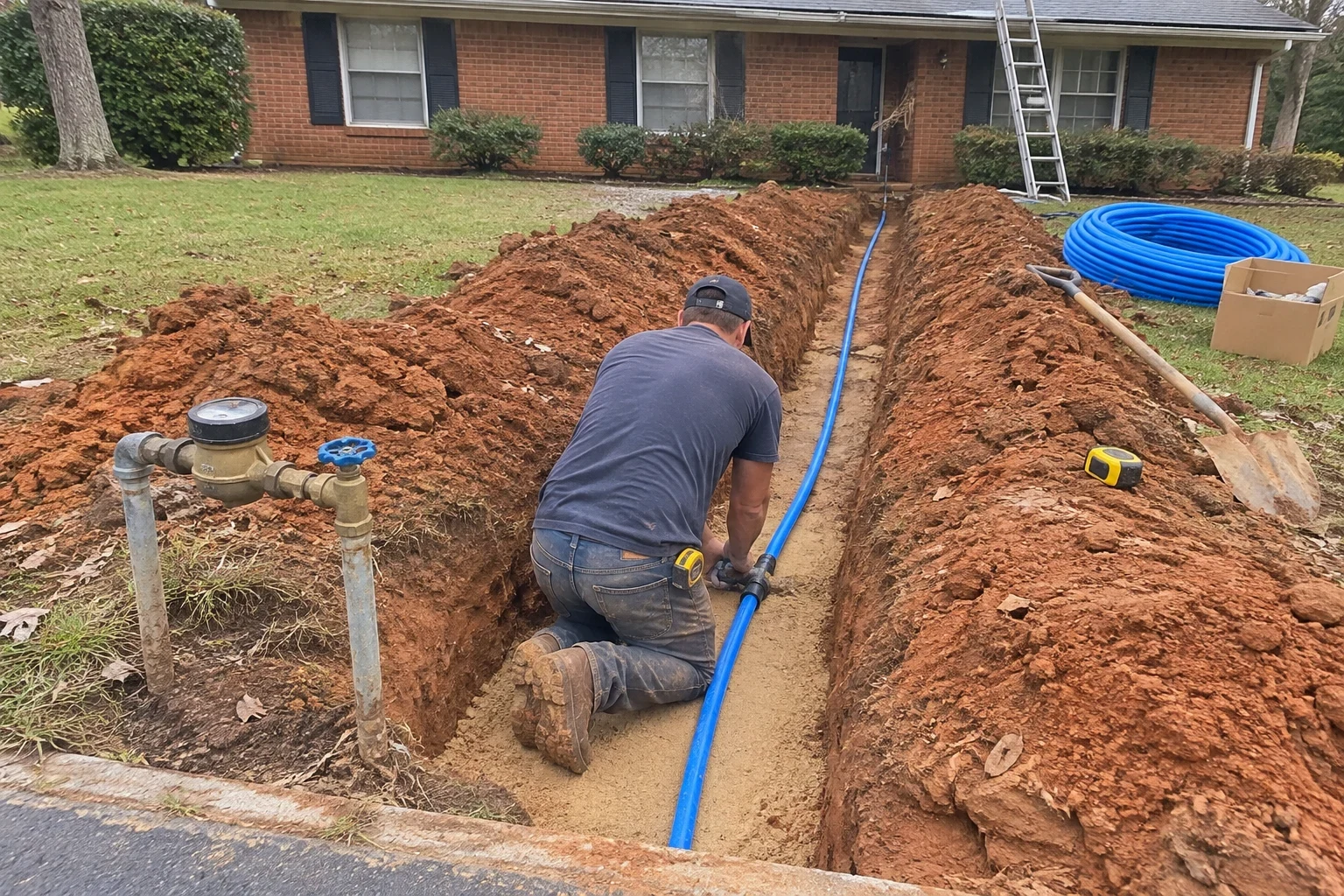
When the pipe that feeds your home starts failing, we replace it with new line set at the depth code requires and have it inspected before the trench is closed. You get steady pressure, clean water and a yard put back in order.
What the main water line does, and when replacing it is the right call
Your main water line is the buried pipe that runs from the utility meter near the street to the shutoff where water enters your home. Every faucet, shower and appliance depends on it. When it wears out, the trouble shows up everywhere at once.
Many older lines are galvanized steel that rusts from the inside, or polybutylene, a gray plastic used widely in the 1980s and 1990s that turns brittle with age. Middle Tennessee clay swells when wet and shrinks in dry spells, which keeps stressing joints year after year. Once a line reaches that point, patching one spot usually just moves the failure a few feet down the pipe.
We tell you plainly whether replacement makes sense. If it does, we handle the paperwork, install the new line to code and keep the inspector's sign-off on file for you.
What the replacement includes
- Locates before any digging
- We arrange for buried utilities to be marked before the first shovel goes in. Gas, electric and cable lines often share the yard with your water line.
- Permit and inspection
- We pull the permit with the local authority and schedule the inspection. The inspector sees the new pipe, the bedding and the depth while the trench is still open, so nothing is buried unchecked.
- New line in modern material
- We typically run PEX or copper sized for your home's demand, chosen with you based on soil, length and budget. Fittings are rated for direct burial.
- Proper depth and bedding
- The pipe sits below the frost depth set by code and rests on clean bedding material rather than rocky clay. That protects it through winter freezes and keeps sharp stones off the pipe.
- Shutoff and connection at the house
- We tie into the meter side and the house side with correct transitions, and set a working main shutoff where you can actually reach it.
- Backfill and cleanup
- We compact the backfill in layers to limit settling, then grade the soil and rake out the work area. Lawn seeding or sod can be discussed when we give you the estimate.
Signs your main water line may need replacing
Pressure dropping all over the house
Weak flow at one fixture is usually local. Weak flow at every tap, especially when two run at once, points to a narrowed or failing supply line.
Rusty or cloudy water
Brown or orange water after the tap runs a while often means corroded galvanized pipe shedding rust. A water filter can treat symptoms, but it will not fix a pipe that is falling apart.
A soggy patch that never dries
A strip of lawn that stays green or wet between the street and your home, even in dry weather, can mean water escaping underground.
An unexplained jump in your water bill
If your habits have not changed and the bill keeps climbing, water may be lost before it reaches your home. The meter's leak indicator can help confirm it.
An older or known-problem pipe
If your home has polybutylene or galvanized supply line, it is worth planning a replacement before it fails on its own schedule rather than yours.
What affects the cost
No two lines cost the same, because the yard and the route matter as much as the pipe. Your written estimate shows each part of the job so you can see where the money goes. We offer financing options and accept all major credit cards and cash.
Length and route
A short, straight run from a meter near the house costs less than a long line around trees, a patio or a driveway.
What sits on top
Open lawn is the simplest surface to dig and restore. Concrete, pavers or mature landscaping take more care and more time to put back.
Soil and rock
Dense clay and limestone ledge, both common in the area, slow excavation and can call for different equipment.
Pipe material and size
PEX and copper differ in material cost and labor. Larger homes or added fixtures may need a bigger line to keep pressure steady.
Inspection fees and connections
Permit fees, meter-side work required by the utility, and a new shutoff or pressure regulator at the house all factor in.
How the work goes
- 1
Free estimate and assessment
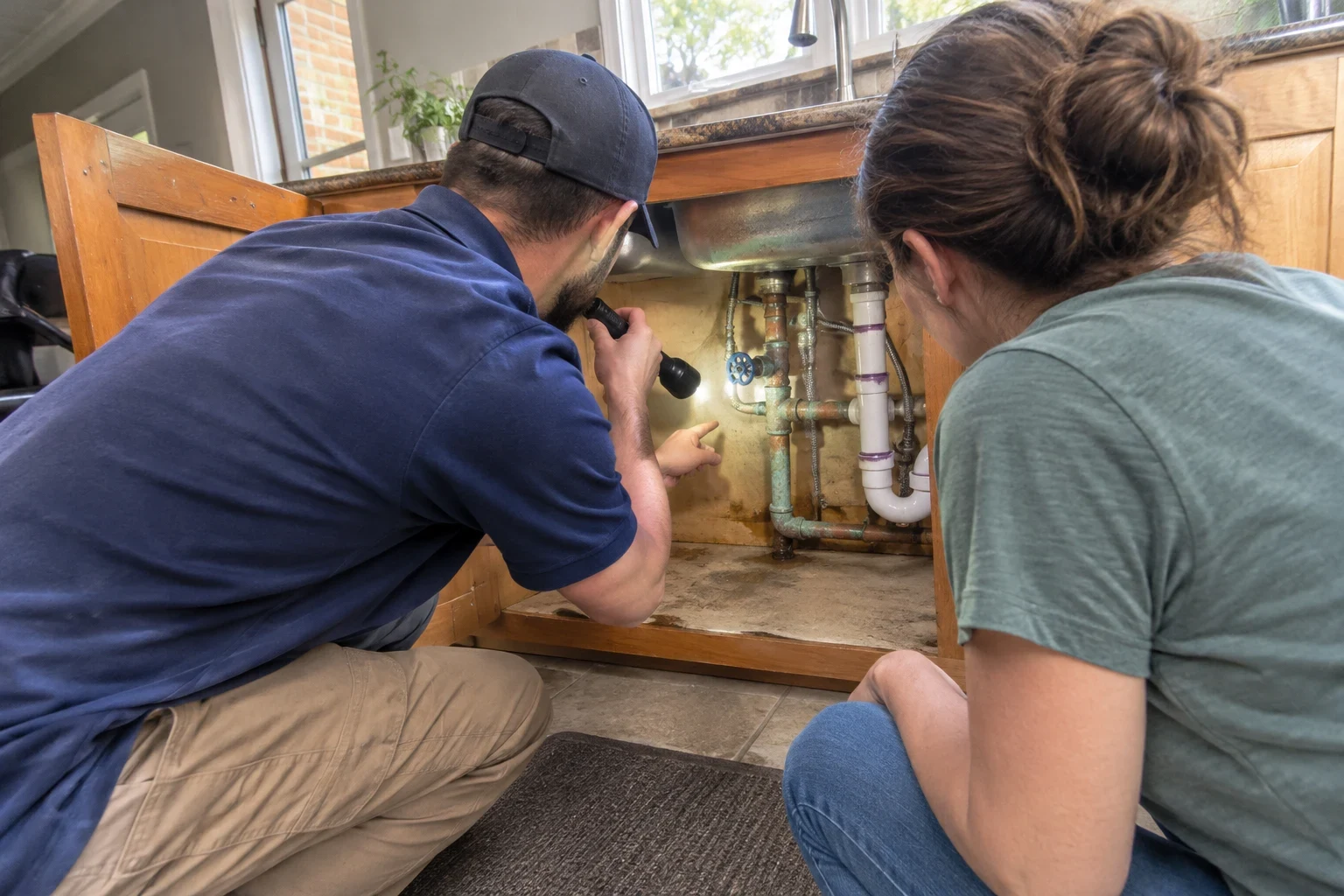
We look at the meter, the shutoff and the route between them, check pressure and talk through what we find. You receive a written estimate that lists the paperwork, materials, digging and restoration separately.
- 2
Approval and scheduling
Once you approve, we file the permit, request utility locates and set a date. We let you know ahead of time how long the water will be off.
- 3
Installation day
We protect walkways and nearby beds, excavate the route, lay bedding and set the new line. Most homes are without water for part of a single day, and we tell you when it will be back.
- 4
Inspection with the trench open
The inspector checks depth, material and connections before anything is covered. We flush the new line, test for leaks and confirm good pressure at your fixtures.
- 5
Backfill and restoration
We backfill in compacted layers, grade the surface and clean up. You keep a copy of the passed inspection for your records or a future sale.
Main water line questions
Do I really need a permit to replace my water line?
In most cases, yes. Replacing a service line is regulated plumbing work, and the inspection confirms the depth, material and connections meet code. A line installed without approval can raise questions when you sell your home, so we handle the permit as part of the job.
Who is responsible for the line, me or the water utility?
Generally the utility owns the meter and the pipe on its side, and the homeowner owns the line from the meter to the house. We confirm where that boundary sits for your property before we quote, so you only pay for what is yours.
Will you tear up my whole yard?
We dig only the route the new line needs and keep the soil contained. Afterward we compact and grade the trench so it settles evenly. Where the route crosses a driveway or walkway, we talk through options before any work starts.
What if my line breaks and I have no water at all?
We offer 24/7 emergency plumbing service. If the line fails overnight or on a weekend, we can come out, get the water shut off and stabilized, and then plan a proper, inspected replacement.
Can you replace the line in Smyrna or Murfreesboro too?
Yes. We work in Eagleville and nearby towns including Christiana, Murfreesboro, Smyrna, Franklin, Spring Hill, Nolensville and Thompson's Station. Local offices differ by jurisdiction, and we file with whichever one covers your address.
Get a clear answer about your water line
We will look at your line, explain whether it needs replacing and give you a written estimate at no charge. If water is already pouring into the yard, we answer around the clock.